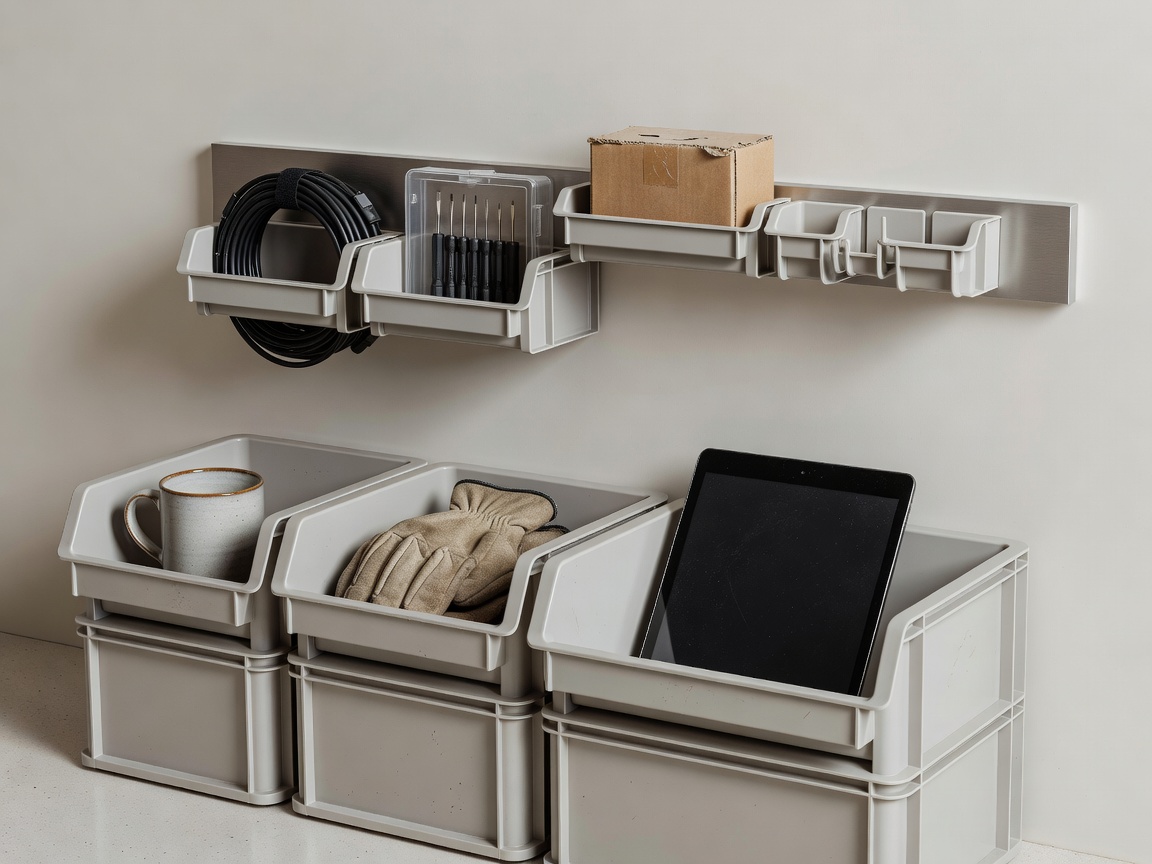
Follow the object to its natural stop
Choose one category that repeatedly escapes its home: shoes, charging cables, reusable shopping bags or paperwork. Watch where it is used and where it is dropped afterward. A cupboard may have spare capacity but still be the wrong destination if reaching it means crossing the room, opening two doors and moving a box.
Put a temporary container near the point of use and give it a clear purpose. The first version can be an existing tray or a sturdy box. Keep it away from exits, heaters and wet areas. The aim is not to turn every surface into storage; it is to test whether a particular location reduces the effort of returning an object.
Separate daily access from reserve capacity
The things used every day deserve the easiest reach. Occasional items can sit farther away, provided they remain safe to retrieve. Avoid describing all upper shelves as useful capacity: if reaching them requires an improvised climb, that capacity may be unsuitable for your household. Never stand on a chair or stack of boxes to reach storage.
Keep heavy objects low and check shelf and unit load limits. Store hazardous household products securely and according to their labels, out of children's reach and separated where required. A visually tidy arrangement is not a safe one if dangerous items become easier to access or if a crowded shelf encourages objects to fall.
Choose modules that solve a measured problem
Modularity is useful when units can adapt to a new room or a changing collection of belongings. It is less useful when repeated bins hide tiny amounts of material behind thick walls. Measure internal usable dimensions, not just the outside of the system. Check whether handles, hinges and lids reduce access in the location you have chosen.
Compare familiar formats rather than assuming that one brand is the answer. IKEA KALLAX cube shelving, IKEA BOAXEL wall-mounted storage and Elfa shelving illustrate different ways to divide space; their installation, loading and fixing requirements differ. These are examples, not endorsements or claims of affiliation. Read current product documentation and measure the exact configuration you intend to use.
The best label is no substitute for a container that is easy to reach, open and put back.
Plan the return action
A deep stack may look efficient but require removing three boxes to reach the bottom one. For frequent items, favor a single retrieval movement where practical. Open bins can suit bulky soft items; drawers can contain small pieces; doors can reduce visual noise. Each option introduces a different action, so test it with the people who will use it.
Labels should describe the household's language, not a perfect taxonomy. “Out the door” may be more useful than separate categories for gloves, sunglasses and travel cards. Leave some room for new arrivals, but make overflow a visible decision. If the container fills, review its contents instead of quietly adding another layer that blocks the original access.
Take stability and rental rules seriously
Tall or top-heavy furniture can tip. Stacking loose units does not make a safe system, and a “freestanding” description does not necessarily remove anchoring requirements. Follow the manufacturer's instructions, including specified anti-tip measures. The U.S. Consumer Product Safety Commission's Anchor It! campaign explains why furniture stability matters, especially where children are present.
Wall rails also need an appropriate structure and fixing method. Obtain landlord permission where required and use a qualified installer when the wall or load is uncertain. Adhesive hooks are not interchangeable with structural fixings. If you cannot install a system safely, choose a different arrangement rather than substituting an unapproved attachment.
Review the system without reorganizing everything
Once a month, check the places where objects are starting to gather again. The cause might be a changed routine rather than a failure of discipline: new school equipment, a different work pattern or seasonal clothing. Adjust one zone at a time. Keep the storage that earns its footprint and remove containers that merely make a blocked route look organized.
If your system involves lifting a bed, opening a table or folding furniture, include that setup effort in the decision. Storage only helps when you can use it repeatedly without avoiding the task. The next guide looks at furniture that changes roles while keeping everyday routines manageable.