Give the room a primary job
List the activities that happen most often, then identify which need the most support. A home used for full working days has different requirements from one used for occasional laptop sessions. A daily bed should not become an awkward afterthought simply because a foldaway design looks clever. Frequency, duration and physical comfort deserve more weight than a long list of possible uses.
Choose a primary arrangement that works without preparation. Add secondary uses only when the transition is manageable. If dinner requires carrying a monitor, keyboard and papers to another room every night, the shared table is creating a storage and handling problem. A nearby work tray or separate compact desk may solve more than an elaborate transforming table.
Measure the whole transformation
Convertible furniture needs more than its closed dimensions. Record the open envelope, the operating space, access to handles and a place for loose cushions or panels. Include the route around the furniture while it is in use. A sofa bed that fills the only path to the door is not made practical by being compact during the day.
Look at the mechanism, not just the promotional image. Can the intended user operate it comfortably? Are there pinch points? Does it require two people or a wall fixing? Follow current instructions and keep children clear during operation. Wall beds and other large transforming systems require particular attention to anchoring and qualified installation where specified.
Compare flexible furniture honestly
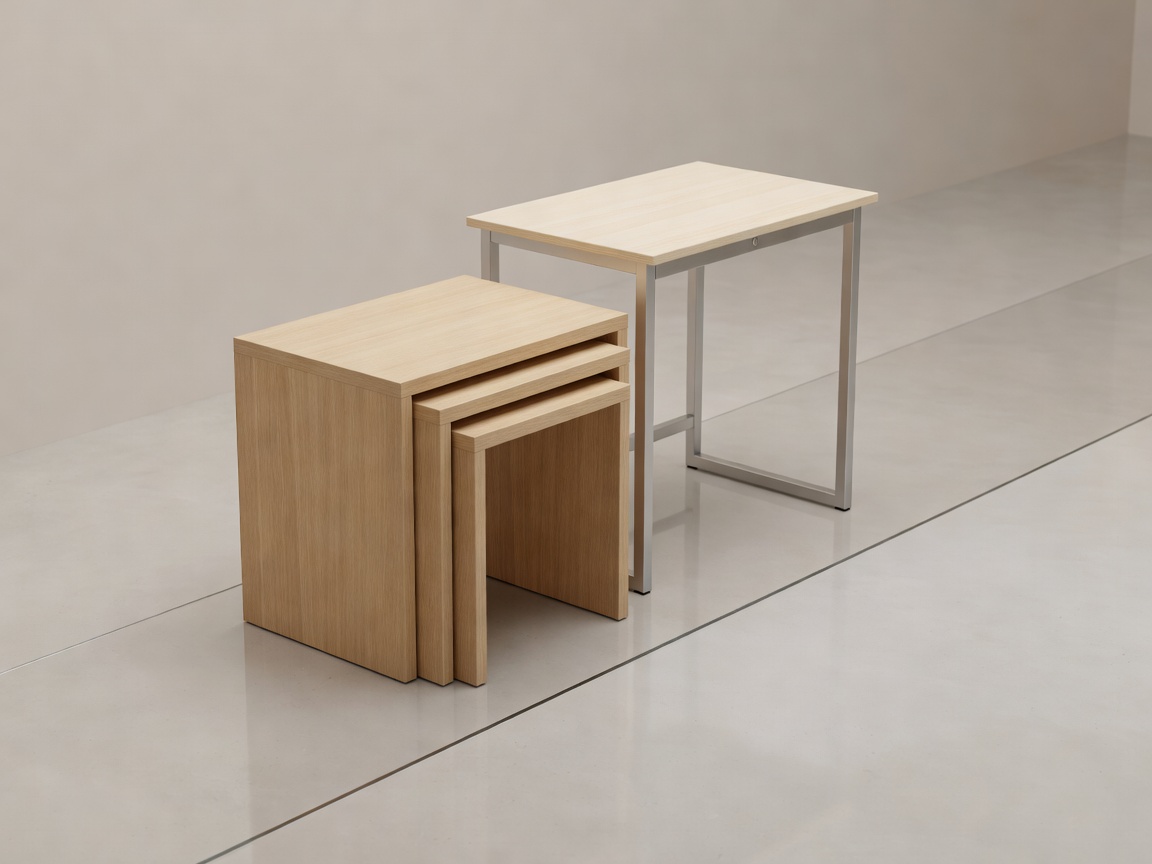
Nesting tables can provide occasional surfaces without a permanent spread, but each table must be easy to retrieve. A drop-leaf table can suit a changing household size, provided the folded leaf does not interfere with knees or seating. A storage ottoman can replace a separate box, but it is less useful for frequently needed objects if someone is always sitting on the lid.
Real products such as the IKEA NORDEN gateleg table and furniture from Resource Furniture illustrate different approaches to compact living. They are reference points, not recommendations or affiliations. Verify exact dimensions, mechanisms, assembly needs and current safety instructions. A product's number of functions tells you little about whether it suits your specific routine.
The most useful multipurpose piece may be the ordinary table you can clear in one movement.
Use boundaries without building obstacles
A rug, the back of a sofa or a change in lighting can distinguish activities without enclosing them. Try visual boundaries before adding shelving across a room. Open shelving still has depth, blocks some light and may need anchoring. A screen can give privacy, but its feet and deployed width need to remain outside the main route.
Consider sightlines from the positions you actually occupy. Does the work setup dominate the view from bed? Can a dining chair face the room rather than a pile of equipment? Small changes in orientation can help uses coexist. Keep windows, ventilation and heating clear according to applicable instructions rather than treating these areas as spare furniture space.
Protect comfort during longer tasks
A compact arrangement should not ask your body to do all the adapting. For sustained computer work, consider chair support, screen position, input devices and opportunities to change posture. The UK Health and Safety Executive's display screen equipment guidance offers a useful starting point for understanding workstation issues; workplace duties and home circumstances vary, so apply relevant local guidance.
Foldable seating may suit an occasional visitor but be unsuitable for a full workday. Similarly, a shallow console may look like a desk while providing too little usable depth for the equipment you need. Test your real activity with real objects before deciding that a small footprint means an efficient solution.
Keep one arrangement easy
After trying the plan, identify the setup you return to most often. Let that be the default instead of restoring an idealized display after every activity. Store secondary-use items together and close enough to retrieve without unpacking the room. A small kit can work better than separate items scattered through several cupboards.
Judge success by reduced friction: fewer lifts, fewer blocked routes and less searching for the parts needed to begin. You do not need a room that transforms endlessly. You need one that supports your actual day, including the unplanned moments when you want to sit down without first reorganizing everything.