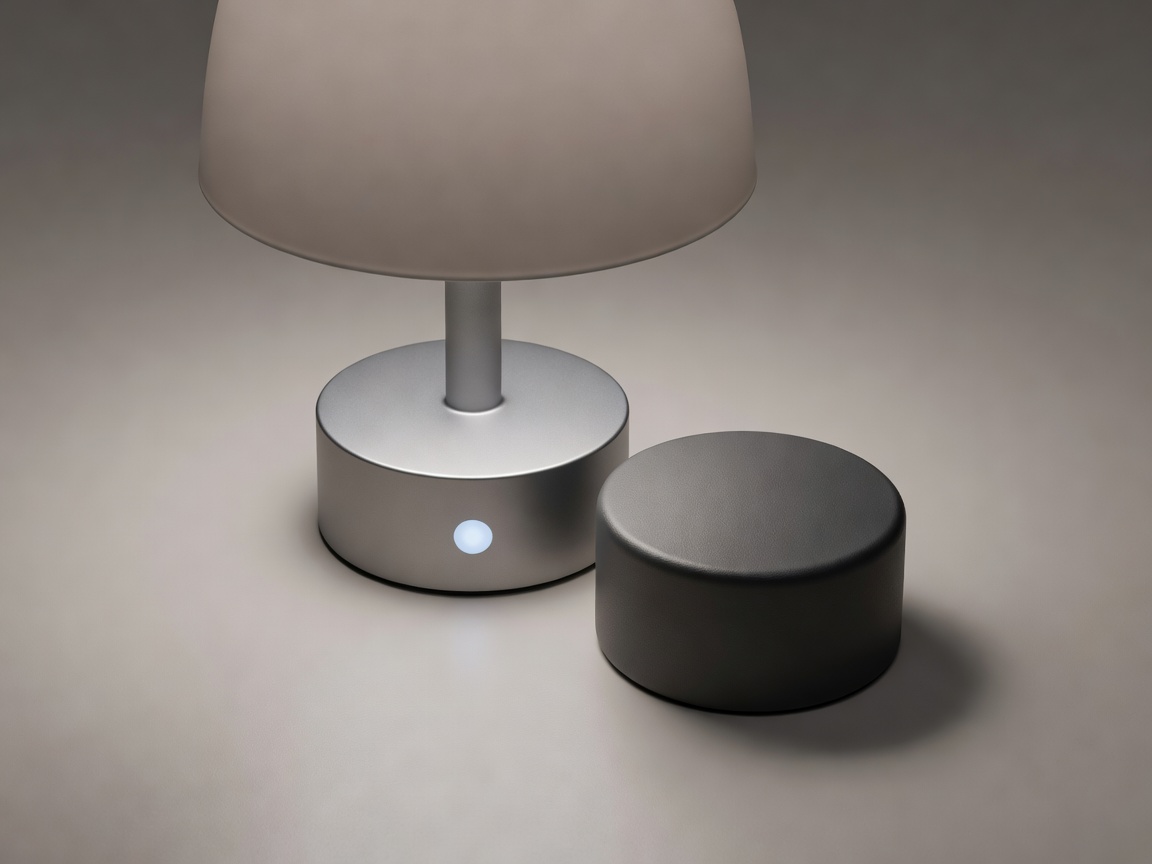
Match the light to the activity
Begin with the places where you read, prepare food, work, dress or move around after dark. Notice where your body casts a shadow and which bright sources sit in your direct view. A ceiling light may illuminate the room while leaving the task under your hands poorly lit. A well-positioned lamp can help without making every corner equally bright.
Think in layers: general light for orientation, task light for a specific activity and decorative or accent light for visual emphasis. These layers can come from a few carefully chosen sources rather than a large collection of fixtures. In a compact home, each lamp also needs a stable base, a safe cable route and a reachable control.
Read specifications beyond the mood photograph
Lumens describe a source's light output; watts describe power use. Neither alone tells you how much useful light reaches your book or worktop. Shade design, direction, distance and surrounding surfaces all affect the result. Compare bulbs using the fixture manufacturer's requirements, including fitting type, physical dimensions and maximum permitted load.
Correlated color temperature, expressed in kelvins, describes the appearance of the light. A 2700 K lamp commonly looks warmer than a 4000 K lamp, but preference and suitability depend on the task and surroundings. The color rendering index, or CRI, provides another piece of information about color appearance, not a complete guarantee of visual quality. Check dimming performance and flicker information where available.
Choose controls the household can understand
A useful control is visible, reachable and predictable. A physical button may be more convenient than opening a phone app. Voice control may help some people but should not be the only option for essential everyday use. Consider guests, children and anyone who does not carry the phone that configured the system.
Test what happens when someone uses the ordinary wall switch, the internet stops working or power returns after an outage. Some smart bulbs become unavailable when their supply is switched off; other devices restore a previous state or turn on. Behavior varies by model and settings, so verify it rather than assuming all products act alike.
A smart accessory earns its place when the room remains understandable without its app.
Check the whole compatibility chain
Matter, supported by the Connectivity Standards Alliance, is an interoperability standard, not a promise that every device exposes every feature in every app. Thread is a networking technology used by some devices and may require a compatible border router. Wi-Fi, Zigbee and Bluetooth products have their own requirements. Check the exact device, controller and supported features together.
Examples such as Philips Hue, Apple Home, Google Home and Amazon Alexa show why ecosystem support matters. These names are reference points, not endorsements or affiliations. Read current documentation for hub needs, account requirements, internet dependence and update support. Before buying a smart plug, confirm the connected device is suitable and its rated load is within the plug's limits. Do not use it to bypass appliance safety controls.
Keep installation and privacy in the plan
Follow electrical ratings, ventilation clearances and local requirements. Use qualified electrical help for fixed wiring or anything you are not competent and permitted to do. Avoid overloaded extensions, covered power supplies and cables under rugs. A renter-friendly setup still needs safe installation; temporary should not mean improvised.
Connected accessories may collect device identifiers, usage events or account information. Review permissions, update policies and deletion controls before adding them. Choose the least complicated system that solves the problem, then test it for a week. If the manual lamp already does the job well, keeping it simple is a valid design decision.